Thursday, 18 February 2016

Butterfly Oasis

A Great Eggfly (Hypolimnas bolina), Owl Butterflies (Caligo sp.) and a Red Mormon (Papilio rumanzovia) feed on fruit at the Niagara Butterfly Conservatory
Photo: Mark Conboy
 
In the dead of a Canadian winter, the naturalist's heart longs for butterflies. It's still at least a month and half before the first Canadian butterflies can be expected on the wing, but there is one oasis of butterfly activity in southern Ontario, the Niagara Butterfly Conservatory. Here's a photo essay of some of the species that were on the wing during a visit I made in early February.
 
Grey Cracker (Hamadryas februa)
Photo: Mark Conboy
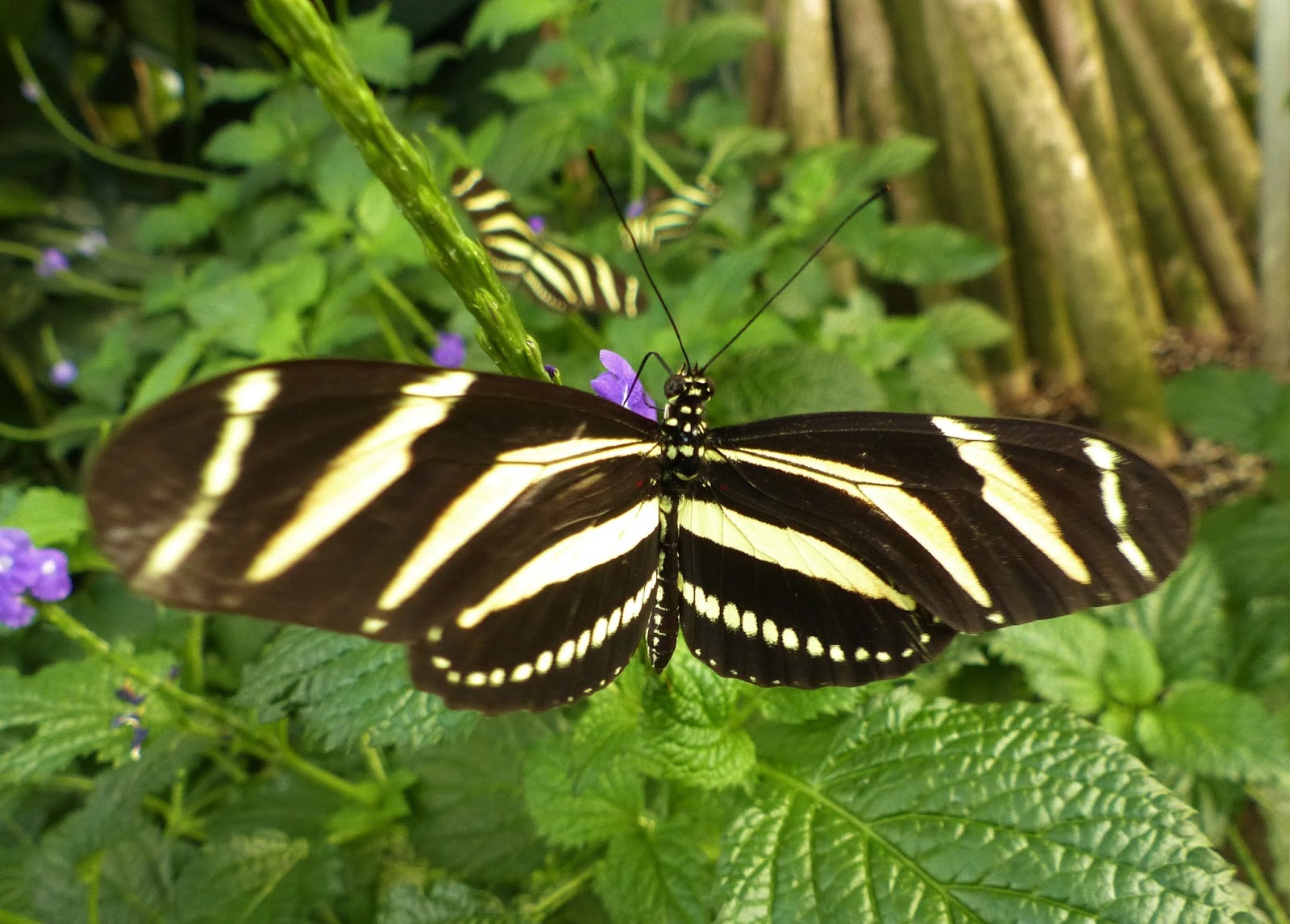
 
 
Zebra Longwing (Heliconius charithonia)
Photo: Mark Conboy
  
Great Eggfly (Hypolimnas bolina)
Photo: Mark Conboy
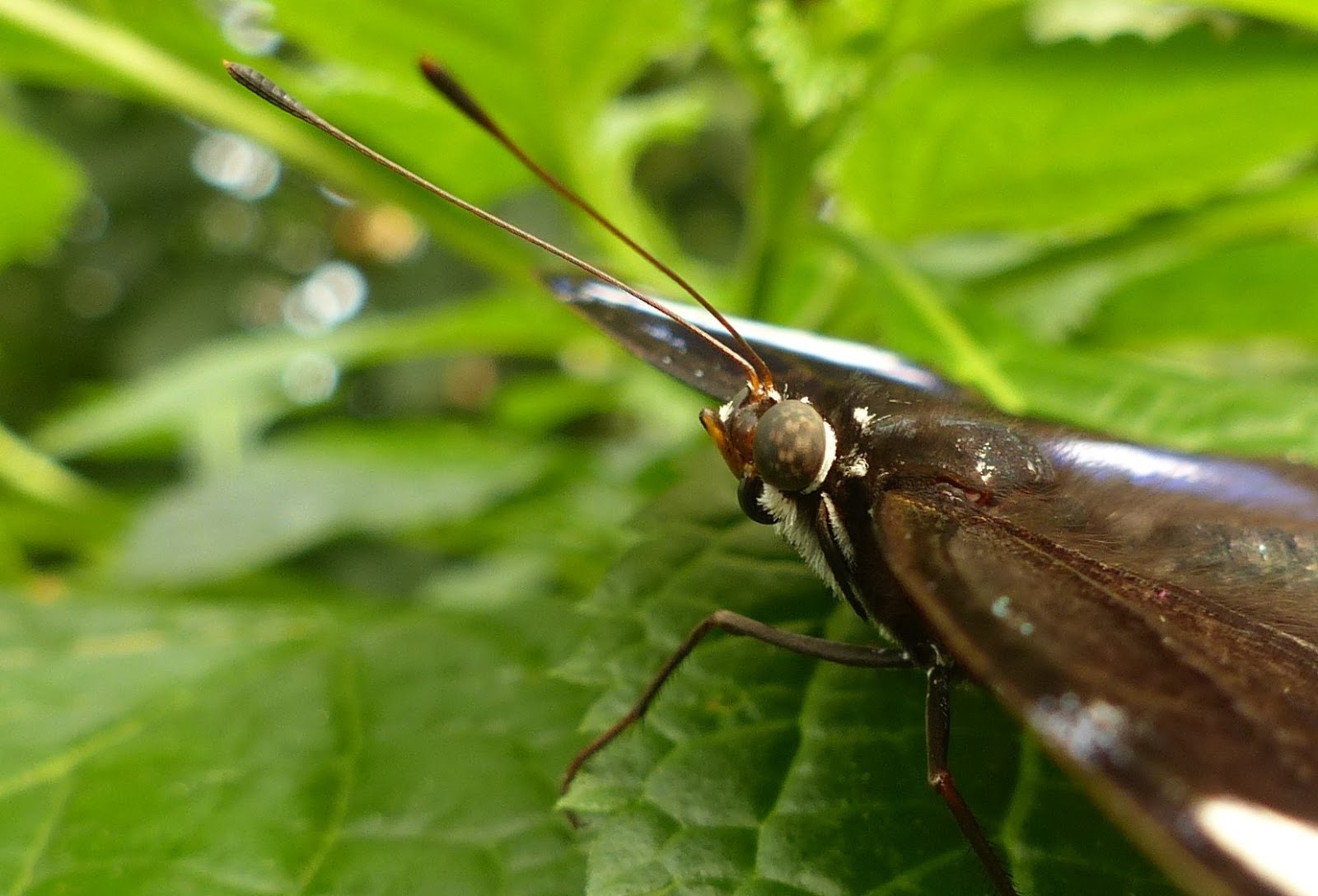
 
Great Eggfly (Hypolimnas bolina)
Photo: Mark Conboy
 
 
Red Mormon (Papilio rumanzovia)
Photo: Mark Conboy
 
Red Mormon (Papilio rumanzovia)
Photo: Mark Conboy
 
Tiger Longwing (Heliconius hecale)
Photo: Mark Conboy
 
Paper Kite (Idea leuconoe)
Photo: Mark Conboy
 
Plain Tiger (Danaus chrysippus)
Photo: Mark Conboy
 
Red Postman (Heliconius erato)
Photo: Mark Conboy
 
Julia (Dryas julia)
Photo: Mark Conboy
 
Blue Wave (Myscelia cyaniris)
Photo: Mark Conboy
 
Peleides Blue Morpho (Morpho peleides)
Photo: Mark Conboy
 
Peleides Blue Morpho (Morpho peleides)
Photo: Mark Conboy
 
Illioneus Owl Butterfly (Caligo illioneus)
Photo: Mark Conboy
 
Mexican Cycadian (Eumaeus toxea)
Photo: Mark Conboy
 
Montezuma's Cattleheart (Parides montezuma)
Photo: Mark Conboy
 
Isabella's Longwing (Eueides isabella)
Photo: Mark Conboy
 
Common Mormon (Papilio polytes)
Photo: Mark Conboy

Monday, 15 February 2016

BioBrevia: Siberia

Baikal Seal (Pusa sibirica)
Photo: Per Harald Olsen (Wikimedia Commons)

Here's a fascinating documentary about the wildlife of Siberia, including the wondrous Lake Baikal, with its landlocked seals and sponge gardens. See it here.

Wednesday, 27 January 2016

BioBrevia: Around the World in 6,042 Birds

ʻIʻiwi (Drepanis coccinea)
Photo: Philina English

Last year was a record-breaking one in competitive birding. In late December, I reported on the new Big Day record set in Ecuador, but another, even more monumental record was broken in 2015. An astounding 6,042 species of birds were seen by Noah Strycker between January 1 and December 31 last year! That shattered the previous record by more than 1,500 species. You can read all about the year-long chase here.

Monday, 18 January 2016

Damsels in Drag

A male (top) and ovipositing andromorph female Taiga Bluet (Coenagrion resolutum)
Photo: D Gordon E Robertson (Wikimedia Commons)

It's midsummer, early evening, and I'm sitting in my canoe, surrounded by swarming damsels. From my boat, wedged among the Broad-leaved Cattail (Typha latifolia), White Water Lily (Nymphaea odorata), Bullhead Pond Lily (Nuphar lutea), European Frog-bit (Hydrocharis morsus-ranae), Watersheild (Brasenia schreberi), and a slightly bewildering assortment of rushes and sedges, I watch the comings and goings of at least 14 different species. I count four spreadwings (Lestes spp.), two dancers (Argia spp.), the colourful Eastern Forktail (Ischura verticalis) and the diminutive Sedge Sprite (Nehalennia irene). Then there are the bluets, my favourites being the beautiful yellow male Vesper Bluets (Enallagma vesperum), which as their name suggests, are vespertinal indeed. And there is the Orange Bluet (Enallagma signatum), Skimming Bluet (Enallagma geminatum), Northern Bluet (Enallagma cyanthigerum), and perhaps one or two more species that require a close examination in the hand to identify with certainty.

This lakeside marsh has a nice variety of species, but the diversity of colours is even greater because all of the damselflies here are sexually dichromatic, males and females are different colours. In sexually dichromatic damsels, it's usually the males that are brightest, more strikingly patterned, than their female counterparts. U
sually, but not always. Sometimes females are just as colourful as males. In certain species, some females in a population closely resemble males (andromorph females), while others wear more subdued hues, making them easy to distinguish from males (gynomorph females). This pattern is called female-limited polymorphism, and it has evolved among many different damselfly lineages, including among most of the ones flying around my canoe.

But why has it evolved in the first place? The most favored hypotheses among odonatologists is that female-limited polymorphism has come about as a way for females to avoid sexual harassment from males. Constant sexual harassment can be problematic for females, making them more susceptible to depredation. That's because the normally cryptically-coloured girls become far more conspicuous when pursued by or attached to a brightly coloured guy. Constant harassment may also impede a female's ability to hunt, which could influence the quality or quantity of the eggs she might lay, or even reduce her lifespan.

Certain species are exposed to harassment much more frequently than others. Harassment isn't a constant problem for females of territorial species. Ebony Jewelwing (Calopteryx maculate) males, for example, establish a territory along a wooded stretch of stream. The male patrols a small parcel of waterfront real estate, chasing off other males, and wooing passing females with their iridescent bodies and ritualized displays of their jet black wings. In the case of Ebony Jewelwings and other territorial species, females can avoid unwanted harassment from males by simply steering clear of their territories. Harassment is a big problem for so-called scramble mating species, such as the Taiga Bluet (Coenagrion resolutum). These damselflies forego establishing and holding territories all together. Instead, males hang out around ponds, and chase virtually every female that comes near, attempting to catch and mate with them before other males do. In the case of Taiga Bluets and other scramble mating species, its much more difficult for females to go about unaccosted, because randy males may be hiding behind any cattail. Indeed, some male damselflies are seemingly always on the prowl for mates, and are very indiscriminate about who they try to copulate with. Male Sedge Sprites, for example, attempt mattings not only with conspecific females (whether they are receptive or not), but also occasionally other males and even females of other species.

Most female damselflies, as far as is known, only need a single mating event to have all of her eggs fertilized, but may be subjected to many advances and forced matings by numerous males, particularly so in scramble-mating species. Thus, females get way more attention than is required, or no doubt wanted. That's not to say that females are entirely at the mercy of males. Sometimes a female that has been caught by a male simply will not adopt the mating "wheel" posture needed to be fertilized. In other cases, females will simply avoid males, or flee when pursued. Females may also be able to select which male's sperm they allow to fertilize their eggs, after copulations with assorted suitors.

Female-limited polymorphism is most common in scramble-mating species and it's a result of all that sexual harassment. Gynomorphs, those females that look different from males, still experience a high degree of the sexual harassment. But andromorphs, male-lookalike females, actually manage to avoid most harassment because males simply can't distinguish females from other males, most of the time. Andromorphs promote their deception further by not only physically resembling males, but also by acting like them. Andromorph female Sedge Sprites tend to do the same kind of chasing behaviours as males do. Heteromorphs don't do that.

Unlike Ebony Jewelwings and other territorial species, scramble-mating males don't appear to use their colourful markings to display to females. So why are they so colourful then? These males use them to signal to each other. It's a form of advertisement that effectively says, I'm not a suitable mating target. It's in the best interest of males to avoid mistaken mating interactions for a number of reasons, not the least of which is the missed mating opportunity. It's exactly this form of signaling that andromorph females play on to avoid unwanted advances.

I'm still left with a couple of questions as I watch the damselflies from my canoe. Why don't all females andromorphs? That way they could all avoid sexual harassment, right? Maybe so, but perhaps there is an advantage to being a gynomorph. Maybe sexual harassment is sometimes worth it if it increases your odds of getting the very best mate. Maybe the camouflage advantage of earth tone colouration, as opposed to bright blue, orange, yellow or purple, is worth the harassment cost. The answer to that one is yet to be determined, but given that polymorphism seems to be a stable characteristic in damselfly populations, both strategies must have their advantages. What about those andromorph females, are they at a disadvantage when it comes to finding a mate? Does being a damsel in drag mean you may never get the chance to hook up with a male? Well, it turns that andromorphs do just fine at finding mates. It seems that being an andromorph doesn't make you immune to the advances of all males, it just quells the tidal wave of orgiastic enthusiasm that can ruin and otherwise fine day at the marsh.

Thursday, 7 January 2016

BioBrevia: Serendipitous Snowy Owl

Snowy Owl (Bubo scandiacus)
Photo: Mark Conboy

Entirely by accident, a Snowy Owl (Bubo scandiacus) was captured on a Montreal traffic camera, earlier this week. The footage was released today. Check out this short story and video from the Canadian Broadcasting Corporation.

Tuesday, 5 January 2016

BioBrevia: Amazing Galapagos

Swallow-tailed Gulls (Creagrus furcatus)
Photo: Philina English

Here's a beautiful look at the wildlife of Ecuador's Galapagos Islands, from irenaVision. A few of the archipelago's endemic species are shown, including Galapagos Tortoise (Geochelone nigra), Marine Iguana (Amblyrhynchus cristatus), Land Iguana (Conolophus subcristatus), Swallow-tailed Gull (Creagrus furcatus), the Galapagos subspecies of Short-eared Owl (Asio flammeus galapagoensis) and California Sea Lion (Zalophus californianus wollebaeki). Conspicuously absent, however, are the most historically important endemics, the mockingbirds and finches, which were so instrumental to Charles Darwin's early thoughts of natural selection. Enjoy.

Monday, 4 January 2016

BioBrevia: Introducing the Ninja Lanternshark

The newly described Ninja Lanternshark (Etmopterus benchleyi)
Photo: From Vasquesz et al 2015

A new species of lanternshark, whimsically named the Ninja Lanternshark (Etmopterus benchleyi), has been described in a paper by Vasquez et al in the Journal of the Ocean Science Foundation. Like the lanternsharks I've written about previously, the Ninja Lanternshark can glow, but it seems to have only a limited number of photophores.

Saturday, 2 January 2016

Sanguivorous Stomoxys

Stable Fly (Stomoxys calcitrans)
Photo: Pavel Krok (Wikimedia Commons)

Biting flies are a fact of life in Canada. From spring snow melt until autumn freeze-up, mosquitoes, deer flies, horse flies, moose flies, snipe flies (Symphoromyia sp.), black flies and no-see-ums (Culicoides sp.) turn forests, wetlands and tundra into buzzing menageries of pain. Oh, how many litres of blood I have donated to the sanguivores of the north! I've lived and worked all over Canada's boreal forest, and the flies there are as bad as can possibly be imagined - actually sometimes they're worse. Presently though, I live in southern Canada, almost as far south as you can go and still be in the Great White North, 700 km from the boreal forest, but even here, on the shores of Lake Erie, the flies still torment me. There are mosquitos, and deer flies, and horse flies, including a particularly large species that I like to call the Darth Vader Fly (Tabanus atratus), but they're nothing like what I'm used to from in north country. Instead, the shores of the Great Lakes harbour yet another villain, one that's every bit as tenacious and often as abundant as its boreal couterparts: the Stable Fly (Stomoxys calcitrans).

Now I've been dealing with Stable Flies all my life, as a minor annoyance on any given fishing or canoe trip. But only recently have I found a place where a normal day in late summer or early fall entails braving swarms of thousands of the little bastards. That place is Long Point, on the north shore of Lake Erie, and I just happen to live there. After spending a summer feeding Stable Flies with generous helping of my blood, I wanted to understand why there are so many flies on Long Point.

Stable Flies are yet another unfortunate addition to the long list of Old World species that have been introduced to North America. That's right, they're not native, so if it wasn't for some damned fool who imported the little monstrosities, we'd be able to enjoy our summers with one less entomological menace. But alas, humans have a particular knack for ruining everything. The Stable Fly likely came to North America in association with livestock as early as the 1700's, and as its name suggests, it's associated with stables, barns, and farms in general. And its on farms that Stable Flies become a serious pest. They are blood suckers, and they can take so much blood from livestock so as to cause anemia, weight loss and reduced milk production. If that wasn't enough, they can potentially transmit lethal diseases like anthrax-causing bacteria, Bacillus anthracis.

Stable Flies are obligate sanguivores, females require not one, but  at least two complete blood meals to produce eggs. Males also bite, something that sets Stable Flies apart from almost all of our other biting flies, in which it's only the females that take blood. Indeed, Stable Flies are oddities within their own family, Muscidae. Most muscids suck up their food using soft, spongy mouthparts, a House Fly (Musca domestica) is a good example. Among our muscids, only the Stable Fly and another livestock pest (that doesn't attack humans), the Horn Fly (Siphona irritans) bite. Stable Fly bites are particularly painful because they don't inject their victims with anesthetic, like mosquitos so courteously do. Feeding primarily on livestock which, other than floppy ears and a whipping tail, have no way to keep the flies at bay, meaning that Stable Flies don't have to exercise subtlety when they bite because there is nothing  their victims can do to stop them anyhow. That's probably also why Stable Flies take their time sucking up blood: it takes about four minutes to consume a complete blood meal.

Thankfully, as anyone who has toiled among Stable Flies will know, these insidious insects fly low, focusing their bloody attacks on the legs and feet, generally sparing the rest of one's body (so dressing appropriately can be a simple and effective defense). But they also, from time to time, fly really high, they've been collected 1 km up and probably go much higher when swept away in weather systems. It's during these high-flying forays that Stable Flies disperse from their breeding sites, the rotting vegetation and manure of active feedlots and barnyards. Rotting vegetation elsewhere, like that which washes up on Great Lakes beaches or in wetlands can also be a source of Stable Flies, but it appears that livestock operations are by far the most important breeding grounds. During these dispersal events, they can form untold concentrations along the shores of the Great Lakes, including literally right in my own backyard. The reason they accumulate specifically along the Great Lakes may have to do with localized weather patterns, lake breezes.

Lake breezes are familiar to all who live on the Great Lakes.
It's the lovely wind that blows onshore throughout the day, moderating summer temperatures, and making the intense humidity of July and August bearable. It's a localized phenomenon that can be thought of as a conveyor belt of air swirling above the lake and shoreline. The lake breeze begins as the morning sun heats the land adjacent to the lake. As it warms, air over land rises, often carrying with it a morning flight of Turkey Vultures (Cathartes aura), hawks, and an assortment of insects, including Stable Flies. The warmed, rising air, once it reaches a certain altitude, flows out over the lake. Vultures and hawks can exit the rising air masses at any time, but Stable Flies often remain trapped, so are pulled out over the lake with the flowing air. Now over the lake, the air begins to cool, descending and carrying with it those same flies. The rising air over land causes an area of low pressure to form, so that higher pressure lake air flows towards the shore, filling the low pressure void. This completes the cycle, the air that was once heated over land and that subsequently cooled and descended over the lake, finally flows back toward to shore. Those same Stable Flies, now well-travelled, ride back to the beach on the lake breeze, and there they accumulate.

Stable Flies aren't the only insects that get caught up in lake breeze cycles. Perhaps even more noticeable are lady beetles. I've been inundated at my Lake Erie home with countless thousands of Multicoloured Asian Lady Beetles (Harmonia axyridis). I've seen their colourful little carcasses wash ashore in unbelievable profusion, the ones that didn't make it; and I've seen every piece of driftwood and debris for kilometres of beach covered in the ones that did. Diabrotica sp. beetles also seem to have a propensity for riding the wind. Seldom is it that I can sit on the beach after a swim and don't find at least one Diabrotica sp. nearby. Other species may congregate on beaches too, not brought there by the lake breeze, but instead to feast on the concentrations of Stable Flies. In late summer and autumn, for example, migratory dragonflies, like Common Green Darner (Anax junius), take advantage of the abundance at Long Point. Let them eat their fill I say. By that I mean the dragonflies, not the stable flies!

Thursday, 31 December 2015

Mushrooms are Never Out of Season

Snowflake sprinkled Winter Mushrooms (Flammulina velutipes)
Photo: Mark Conboy

My mother finds some of the most interesting Christmas cards you can imagine. Among the hundreds she's stuck to our family's gifts over the years is one that sticks in my mind: an absurd illustration of a huge red and white Fly Agaric (Amanita muscaria) mushroom protruding from a thick blanket of snow and surrounded by various happy and jolly wintry creatures. I wish I still had that card, just for the laughs it brought me. Fly Agarics don't grow in the winter, at least not where I live, but there is one species that does. My interest in this species was peaked yesterday afternoon when I found a cluster growing on a decrepit old Heart-leaved Willow (Salix cordata).

The wild form of this mushroom is variously called Winter Mushroom, Black Foot, Velvet Foot, Velvet Stem, Velvet Stalk, Velvet Shank, or Seafood Mushroom. There's also a domestic form that goes by a different suite of names: Golden Needle Mushroom, Lily Mushroom, Enoki, and perhaps most popularly, Enokitake. Either way, all names refer to Flammulina velutina, and its the only species of mushroom that regularly fruits in winter. Winter Mushrooms can grow in colder weather than most other species, in part because they have proteins that bind to ice, lowering the freezing point, reducing the chances of cell damage in moderately cold temperatures.

The domestic form of the Winter Mushroom (Flammulina velutipes)
Photo: Chris 73 (Wikimedia Commons)

By comparison to the wild type (top photo), the form of Winter Mushroom that can be purchased in grocery stores and Chinatowns, usually called Enotitake, is almost unrecognizable. Enotitake is one of the most commonly cultivated fungi species in the world. They're grown in darkness, so the mushrooms don't develop any pigments. They're also grown in a CO2-rich environment, which causes the mushrooms to take on a long, thin habit and develop only small button-like caps. Yes, the wild form is edible too, but use caution not to confuse it with other late-fruiting wood-dwelling mushrooms, such as Deadly Galerina (Galerina autumnalis) and its congeners. Needless to say, you don't want to eat Deadly Galerina; expert advice and a good field guide are absolutely necessary when identifying edible mushrooms.

Tuesday, 29 December 2015

BioBrevia: Smallest of the Small

This shot of a Buprestis striata is indeed macro, but the Nikon Small World
Photomicrography Competition takes it to a whole new level.
Photo: Mark Conboy

The winners of the 2015 Nikon Small World Photomicrography Competition have been announced. The winner was Ralph Grimm's shot of a pollen-laced European Honey Bee (Apis mellifera) eye. Check out these stunning images. While you're at it, also check out the Small World in Motion Competition. The winner was Wim van Egmond's video of two ciliate protozoans: a Trachelius sp. depredating a Campanella sp.